
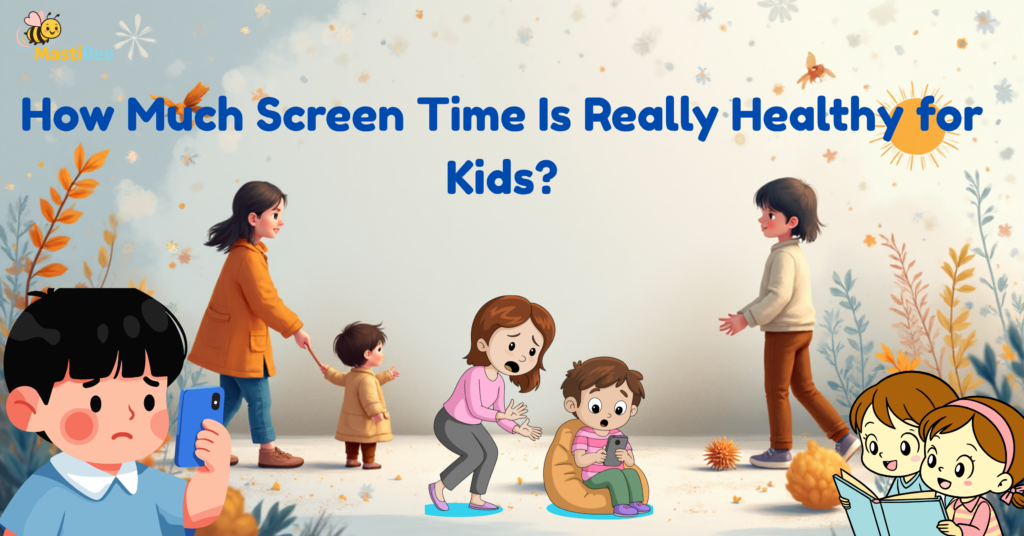
How Much Screen Time Is Really Healthy for Kids? As parents, screens are one of those topics that quietly sit in the back of our minds .
We rely on them.
We worry about them.
And most days, we’re not sure if we’re doing it right or the wrong.
Is a cartoon while cooking dinner okay for the child?
What about learning apps, do they harm the children?
How much screen time is too much for the children?
Let’s take a deep breath — because this guide is not about guilt .
It’s about balance, clarity, guidance and realistic choices for you.
This age-wise guide helps parents manage screen time for kids without guilt
Why does the Screen Time need an Age-Wise Approach
Not all screen time is bad or harmful.
But also, not all screen time is helpful for the children.
The child may be a 2-year-old and a 10-year-old; they don’t learn the same way, so their screen needs shouldn’t be the same.
According to global child health guidelines, excessive screen time can impact sleep, attention, and emotional development.
That’s why pediatric experts recommend different screen time limits for children by age, focusing not just on how long, but also what kind of content they consume at the right age.
Screen Time for Kids by Age (Simple & Practical)
Ages 0–2: Avoid Screens as Much as Possible
Recommended screen time:
Ideally, none (except video calls with family)
At this stage, children learn best through:
- Face-to-face interaction
- Touch, sound, and movement
- Real-world exploration
A screen can’t replace eye contact, a parent’s voice, or hands-on play.
Tip for parents:
If screens are unavoidable, keep them short and sit with your child. Talk about what’s on the screen instead of letting it play passively.
🧸 Ages 2–4: Limited & Guided Screen Time
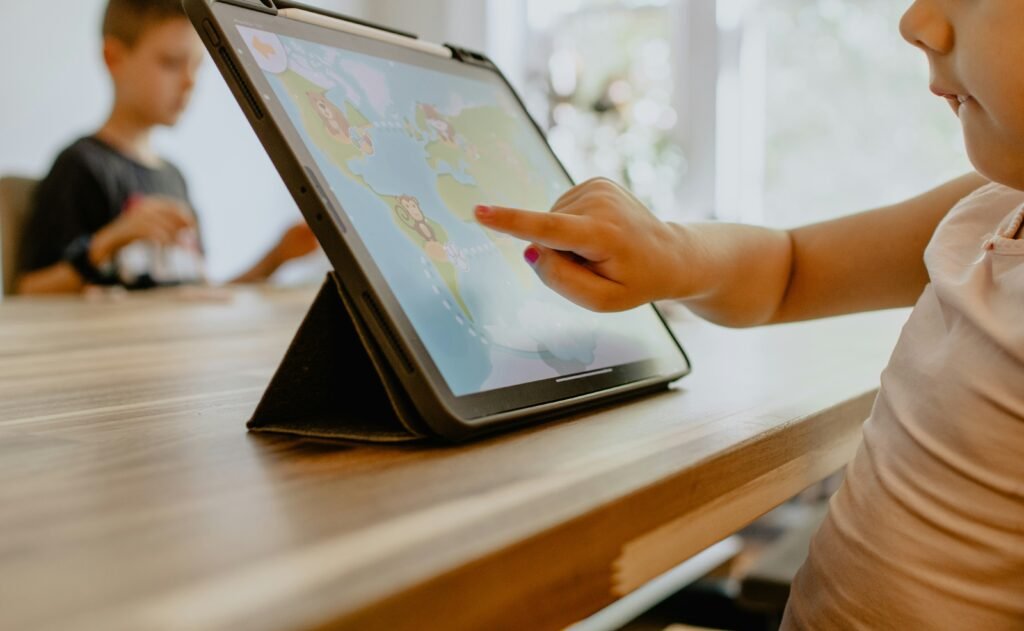
Healthy screen time for toddlers:
➡️ Up to 1 hour per day
This is the age when screens can be introduced — carefully.
But should not make a habit.
What matters most:
- Educational content
- Slow-paced, age-appropriate videos
- Watching together, not alone
- Personality development content
Avoid:
- Fast cuts
- Loud, overstimulating animations
- Endless autoplay
Better alternatives:
Hands-on learning, simple puzzles, storytelling, and creative play build stronger foundations than screens ever will.
We, the MastiBee team, have planned many activity books and created several games and other products that are usually child-friendly and trusted by many parents.
For Ages 5–7: Balance Is Key
Recommended screen time:
1–2 hours per day
At this stage, kids can benefit from:
- Learning videos
- Interactive educational games
- Creative apps (drawing, building, storytelling)
But screens should never replace play.
Kids still need:
- Physical activity
- Imaginative play
- Time to be bored (yes, boredom is healthy!)
Parent tip:
Use screens as a tool, not a babysitter.
Use the tools wisely.
Ages 8–12: Focus on Quality Over Quantity
Screen time limits for children:
Up to 2 hours of recreational screen time
Schoolwork may require screens — that’s okay.
What’s important is:
- Setting clear boundaries
- Avoiding screens right before bed
- Encouraging offline hobbies
- Encourage them to play with the siblings, friends and neighbours too.
At this age, kids also start modelling adult behaviour.
If we’re always on our phones, they notice this and adore from you.
Talk to them, ask about their school, friend’s and try to answer their questions – really at this age, children have many questions.
What Actually Makes Screen Time “Healthy”?
It’s not just about minutes or hours on a clock.
Healthy screen time:
- Encourages learning or creativity
- Is age-appropriate
- Doesn’t replace sleep, play, or family time
- Is balanced with offline activities
Unhealthy screen time:
- Is passive and endless
- Causes tantrums when stopped
- Replaces movement and interaction
- Interferes with sleep
make sure you check out our shop
A Healthier Alternative: Play-Based Learning
One of the best ways to reduce screen dependency is to offer engaging offline alternatives.
When kids are:
- Building
- Creating
- Exploring
- Solving problems with their hands
They naturally lose interest in screens.
At MastiBee, we believe learning happens best when kids are actively involved — through play that sparks curiosity, creativity, and confidence.
Final Thoughts for Parents
If you’ve ever felt unsure about screen time, you’re not alone.
You don’t need perfection.
You need awareness, boundaries, and balance.
Some days will include more screens.
Some days will be full of play.
And that’s okay.
What matters most is intentional parenting, not perfect parenting.
Think of your childhood , the way you enjoyed and the way your parents treated you, yes, the kids belong to the new generation, but not you.
Make while leaving, don’t forget to leave a review, maybe your one review can change many parents’ life.
make sure you also visit my site abrarhasnath.com
💛 Want more parenting and learning tips?
Join the MastiBee community and explore ideas that help your child grow — on and off screens.
share us on